During this lecture Jason Nelson mostly screwed around and showed us a lot of unique and interesting websites and tools. The first page he showed us was speedtest.net. The page gave us an interesting look how long it takes, if you wanna communicate with computers all over the world.
After that he explained to us the Dot Com boom and crash. First the people were so much into it and they spent a lot of money for .com stocks, but later the internet was not yet such a profitable tool and the people didn't investigate in it any more.
Then we got an overview about archive.com, really interesting page, which want to show the visual evolution of the internet pages. It takes screenshots of all kinds of major wbsites over the years and Jason showed us the beginnings of myspace, which was first a really boring page.
Jason went on and told us more about social networking sites and then we took a look at some crazy social networking sites like 'elftown' or 'Woofer'- the anti 'Twitter' page.
Later we got more information about Google Maps and how we can use it. That was the same with sketchcast, a funny tool, that converts you and your online drawing into a video. As an example we saw a video of a lady and a hotdog.
Tuesday, August 25, 2009

Saturday, August 22, 2009
Summary, lecture 4
BIG SCREEN TO the small screen!
I----------------------------------------------I------------------------------------------------I
Timeline:

1895: Birth of Cinema
1906: First feature length narrative film (in Australia, by Australian) - few years later Europe, then USA
1927: First spoken film ('Talkies') -> 'The Yazz singer'
1929: First all colour movie
1933: First drive- in theatre (in New Jersey)
1937: Disney released 'Snow White', animated movie
1939: first TV, but only very little shows on TV
1939- 1952: hieps of movies were produced during these years
1952: 3 D
1955: Hollywood started to produce movies for television
1956: first videorecorder
1959: 'Percepto Vision' invented by a horror film producer (it gave little electro shoks), 'smell cinema'
1963: videorecorder for consumer, multiplex theatre- now blockbuster movies were shown
1967-69: Sony introduced VCR + Portapak
1970: Imax
1972: pay TV (in America)
1985: first blockbuster video store where you could rent movies
1986:Computer-Generated-Animation(Luxo Jr., Pixar)
1995: 'Toy Story'
1997: DVD, Video
2001: BMW 'The Driver', production of a short film for the Internet (with the brand new BMW in it)
Today: everybody can produce little films and put it on the Internet, for example 'YouTube' (TROOPS)
(pictures: google images)
I----------------------------------------------I------------------------------------------------I
Timeline:
1895: Birth of Cinema
1906: First feature length narrative film (in Australia, by Australian) - few years later Europe, then USA
1927: First spoken film ('Talkies') -> 'The Yazz singer'
1929: First all colour movie
1933: First drive- in theatre (in New Jersey)
1937: Disney released 'Snow White', animated movie
1939: first TV, but only very little shows on TV
1939- 1952: hieps of movies were produced during these years
1952: 3 D
1955: Hollywood started to produce movies for television
1956: first videorecorder
1959: 'Percepto Vision' invented by a horror film producer (it gave little electro shoks), 'smell cinema'
1963: videorecorder for consumer, multiplex theatre- now blockbuster movies were shown
1967-69: Sony introduced VCR + Portapak
1970: Imax
1972: pay TV (in America)
1985: first blockbuster video store where you could rent movies
1986:Computer-Generated-Animation(Luxo Jr., Pixar)
1995: 'Toy Story'
1997: DVD, Video
2001: BMW 'The Driver', production of a short film for the Internet (with the brand new BMW in it)

Today: everybody can produce little films and put it on the Internet, for example 'YouTube' (TROOPS)
(pictures: google images)
Tuesday, August 18, 2009
Tutorial Week 4
The task for the tutorial today is to answer a lot of questions, but without using google and I'm not allowed to get all my answers from wikipedia. So, let's see what I can find...

1. What is the weight of the world's biggest pumpkin? How long did it take to grow?
-The world's biggest pumpkin was found on September 29, 2007. His weight is 1689 pound. It's really huge!! The world record holder is Joe Jutras. His pumpkin took 5 months to grow up to this size.
(www.yahoo.com)
http://www.bigpumpkins.com/ViewArticle.asp?id=162&gid=50

2. What is the best way (quickest, most reliable) to contact Lilly Allen?
-If you want to contact Lilly Allen just visit her website: http://www.lilyallenmusic.com/lily/
or use twitter...

3. What is the length of a giraffe's tongue?
-A giraffe’s tongue is 18-20 inches long, that's about 46-centimeter...Wow!!
A giraffe needs about 75 pounds (34 kilograms) of food per day. It' their main activity during the day. They prefer eating leaves from the acadia tree and at the zoo they also love to eat hay, carrots, and leaf eater biscuits.
(www.scroogle.org)
http://www.sandiegozoo.org/animalbytes/t-giraffe.html
4. How would you define the word 'glycomics'? In your own words, what does it really mean? What does the term 'seagull manager' refer to?
-Glycomics is the study of scientific processes including genetic, physiologic, path ologic, and other aspects. It's about the entire complement of sugars. Glycans is really important for the survival and healthy function of a cell. You can use it to get an answer to cancer, infectious diseases, diabetes, inflammation and immune disorders.
(www.scroogle.org)
http://www.griffith.edu.au/science/institute-glycomics
http://www.tower.com/handbook-glycomics-richard-d-cummings-hardcover/wapi/113383396
Seagull manager:
-A Seagull manager doesn't work at an office the whole time. He only has to come into the workplace if there is a problem or if he has to criticize or critique employees. The word was first used in an Marketing article by Michael Madison. It is a management style of interacting- the Seagull manager gives advices, but then he leaves and other people have to deal with it.
-Another funny definition:
'A manager, who flies in, makes a lot of noise, craps on everything, and then leaves.'
http://www.employmentcrossroads.com/2009/02/humor-some-new-business-jargon/
(www.scroogle.org)
http://en.wiktionary.org/wiki/seagull_manager


5. What was David Cronenberg's first feature film? Which of his films had 'Blondie' in it?
- His first feature film was 'Transfer' (1966). The story is only about two people and their relationships. It is a very short film, only about seven minutes, it is written, shot, edited and directed by Cronenberg.
-'Videodrom' is the film, in which 'Blondie' Debbie Harry is an actor in it.
(www.scroogle.org)
http://www.imdb.com/name/nm0000343/
http://www.imdb.com/title/tt0086541/

6. When was the original 'Hacker's Manifesto' written?
- Written January 8, 1986, by 'The Mentor'
(www.yahoo.com)
http://www.mithral.com/~beberg/manifesto.html
7. Why do phone numbers in Hollywood films start with '555' ?
- Many years ago it was popular in the USA to use exchange names as part of the telephone number. The first 3 letters of the exchange name were dialled followed by numbers. The number 5 on the dial corresponded with the letters JKL, but you can't make all English place names using these three letters, so the solution was the 555 code. And the reason why Hollywood used the 555 code was, cause it was a fictional number and they didn't want to use real numbers. They wanted to prevent real subscribers being harassed by members of the public trying out the numbers quoted on the screen. And another reason is: Hollywood is fake so the phonenumber definitly has to be a fake, too...
(www.scroogle.org)
http://en.wikipedia.org/wiki/555_(telephone_number).....sorry :)

8. What is the cheapest form of travel from the Gold Coast to Sydney?
- I think the cheapest way would be to walk from the Gold Coast to Sydney :)
But probably it's not the most comfortable way.
So if you want to travel by plan you have to pay between 50 and 100 Dollar, depends on the date you want to fly. Or you can take the Greyhound, then you have to pay around 100 Dollar.
Or rent a car.
http://www.greyhound.com.au
http://www.webjet.com.au

9. What song was top of the Australian Pop Charts this week in 1965?
- In week 34 top of the Australian Pop Charts was the song 'I want you back', Jackson 5.
(reference: my neighbour :), i'm sorry, but i couldn't find it...)

10. Which Brisbane band includes Stephen Stockwell on keyboards and vo cals?
cals?
- It's the Brisbane punk band, the 'Black Assassins'.
(www.yahoo.com)
http://live-wirez.gu.edu.au/Staff/Stephen/default.html
1. What is the weight of the world's biggest pumpkin? How long did it take to grow?
-The world's biggest pumpkin was found on September 29, 2007. His weight is 1689 pound. It's really huge!! The world record holder is Joe Jutras. His pumpkin took 5 months to grow up to this size.
(www.yahoo.com)
http://www.bigpumpkins.com/ViewArticle.asp?id=162&gid=50
2. What is the best way (quickest, most reliable) to contact Lilly Allen?
-If you want to contact Lilly Allen just visit her website: http://www.lilyallenmusic.com/lily/
or use twitter...
3. What is the length of a giraffe's tongue?
-A giraffe’s tongue is 18-20 inches long, that's about 46-centimeter...Wow!!
A giraffe needs about 75 pounds (34 kilograms) of food per day. It' their main activity during the day. They prefer eating leaves from the acadia tree and at the zoo they also love to eat hay, carrots, and leaf eater biscuits.
(www.scroogle.org)
http://www.sandiegozoo.org/animalbytes/t-giraffe.html
4. How would you define the word 'glycomics'? In your own words, what does it really mean? What does the term 'seagull manager' refer to?
-Glycomics is the study of scientific processes including genetic, physiologic, path
 ologic, and other aspects. It's about the entire complement of sugars. Glycans is really important for the survival and healthy function of a cell. You can use it to get an answer to cancer, infectious diseases, diabetes, inflammation and immune disorders.
(www.scroogle.org)
http://www.griffith.edu.au/science/institute-glycomics
http://www.tower.com/handbook-glycomics-richard-d-cummings-hardcover/wapi/113383396
Seagull manager:
-A Seagull manager doesn't work at an office the whole time. He only has to come into the workplace if there is a problem or if he has to criticize or critique employees. The word was first used in an Marketing article by Michael Madison. It is a management style of interacting- the Seagull manager gives advices, but then he leaves and other people have to deal with it.
-Another funny definition:
'A manager, who flies in, makes a lot of noise, craps on everything, and then leaves.'
http://www.employmentcrossroads.com/2009/02/humor-some-new-business-jargon/
(www.scroogle.org)
http://en.wiktionary.org/wiki/seagull_manager
5. What was David Cronenberg's first feature film? Which of his films had 'Blondie' in it?
- His first feature film was 'Transfer' (1966). The story is only about two people and their relationships. It is a very short film, only about seven minutes, it is written, shot, edited and directed by Cronenberg.
-'Videodrom' is the film, in which 'Blondie' Debbie Harry is an actor in it.
(www.scroogle.org)
http://www.imdb.com/name/nm0000343/
http://www.imdb.com/title/tt0086541/

6. When was the original 'Hacker's Manifesto' written?
- Written January 8, 1986, by 'The Mentor'
(www.yahoo.com)
http://www.mithral.com/~beberg/manifesto.html
7. Why do phone numbers in Hollywood films start with '555' ?
- Many years ago it was popular in the USA to use exchange names as part of the telephone number. The first 3 letters of the exchange name were dialled followed by numbers. The number 5 on the dial corresponded with the letters JKL, but you can't make all English place names using these three letters, so the solution was the 555 code. And the reason why Hollywood used the 555 code was, cause it was a fictional number and they didn't want to use real numbers. They wanted to prevent real subscribers being harassed by members of the public trying out the numbers quoted on the screen. And another reason is: Hollywood is fake so the phonenumber definitly has to be a fake, too...
(www.scroogle.org)
http://en.wikipedia.org/wiki/555_(telephone_number).....sorry :)

8. What is the cheapest form of travel from the Gold Coast to Sydney?
- I think the cheapest way would be to walk from the Gold Coast to Sydney :)
But probably it's not the most comfortable way.
So if you want to travel by plan you have to pay between 50 and 100 Dollar, depends on the date you want to fly. Or you can take the Greyhound, then you have to pay around 100 Dollar.
Or rent a car.
http://www.greyhound.com.au
http://www.webjet.com.au

9. What song was top of the Australian Pop Charts this week in 1965?
- In week 34 top of the Australian Pop Charts was the song 'I want you back', Jackson 5.
(reference: my neighbour :), i'm sorry, but i couldn't find it...)

10. Which Brisbane band includes Stephen Stockwell on keyboards and vo
 cals?
cals?- It's the Brisbane punk band, the 'Black Assassins'.
(www.yahoo.com)
http://live-wirez.gu.edu.au/Staff/Stephen/default.html
Wednesday, August 12, 2009
Summary, lecture 3
Cine- Speak
Learning the Language of the Cinema
There are a lot of different Shot Types:
VLS/ WS: Very LS/ Wide Shot
LS: Long Shot
MLS: Medium LS
MS: Mid Shot
MCU: Medium Close Up
CU: Close Up
BCU: Big CU
ECU: Extreme CU
First there is the Shot, then the scene and finally the film...
Shots are like words. They can help you to answer the questions Who? What? Where? When? Why? How?
Who? is most important and has to be answered first, cause without the who the story can't exist.
1. Who?
- Shot Type: Close Up
It answers the question of 'who' by showing the character in detail.
2. What? -What is the character doing?
- Shot Type: Mid Shot
It answers by showing the subject performing an action. Important: It shows the character.
3. Where? - relationships between people and places
- Shot Type: Long Shot
The Long Shot gives the answer to the 'where' question at the beginning of a scene, it is also known as the Establishing Shot. It is important for the audience to know where the action takes place.
4. When?
- Shot Type: Wide Shot and Close Up
Both types can help to answer the 'when' question. Time can be a difficult thing to capture on the screen. You have to know in which time the film is playing and all the people, places and things have to fit in these time. The passing of the time is really important.
5. Why?
- Shot Type: Big Close Up
It can helps to answer the 'why', by revealing more about a character and their actions.
But the 'why' questions must not be explain to early, otherwise there is no reason to watch the film to the end.
6. How?
- Shot Types: Medium Close Up or series of Close Ups
They can explain an event and answer the 'how' question.
"RULES"
Head Room:
-not to much or to little head room
Talking Room:
- not to much or to little talking room
Rules of Thirds:
- you need a raster over the picture
- it's all about positioning
- subject of interest must not be in the middle of the picture
180 Degree Rule:
- it's the line between two people having a conversation
- it has to be 180 degree to take a photo where you can see the faces of both people
IMPORTANT:
Every Shot has to be arranged.
Every Shot needs a reason why it is in the film.
Every Shot has to be new.
Every Shot must have a purpose.
TASK:
Watch a movie and answer the Who? What? Where? When? Why? How? questions.
- I decided to watch the movie 'Blood Diamond', cause I think it's a really good and interesting film with a lot of different shot types. And by chance I watched the preview of the serial 'Dexter' and was really surprised about the inconvenient shot types.
In the preview they show normal things like baking an egg, or preparing meat for baking or crushing coffee, but because of the really 'Extreme Close Up' all these things are looking really disgusting and unnormal and fitting perfect into the preview for 'Dexter'.
Blood Diamond:

Who?
In the beginning of the movie there are a lot of Close Ups of the leading actors Danny Archer (Leonardo DiCaprio) and Solomon Vandy (Djimon Hounsou) so the viewer knows who the character is.
What?
To answer the 'What?' question the audience can see some Mid Shots where the producer shows what happend and what the story is about. You can see that Danny is an diamond smuggler and make deals about it. Or you can see Solomon and his family and in the next sequence the viewer can see, that his family were attacked and broked away.
Where? When?
The story takes places during the Sierra Leone Civil War in 1999 and you see some Long Shots and Wide Shots for example of the landscape or the rebels of the Revolutionary United Front (RUF). Directly at the beginning of the scene the viewer gets to know where the story is set.
Why? How?
Through the different Close Ups the audience get to know more about the characters and what they are doing, why and how. You can see the faces and the feelings of the people. Danny always wants to be a tough guy, but he also has a lot of problems and fear. And in the face of Solomon you can see also fear, but there is still hope and he has a really strong will.
(picture: google images)
Learning the Language of the Cinema
There are a lot of different Shot Types:
VLS/ WS: Very LS/ Wide Shot
LS: Long Shot
MLS: Medium LS
MS: Mid Shot
MCU: Medium Close Up
CU: Close Up
BCU: Big CU
ECU: Extreme CU
First there is the Shot, then the scene and finally the film...
Shots are like words. They can help you to answer the questions Who? What? Where? When? Why? How?
Who? is most important and has to be answered first, cause without the who the story can't exist.
1. Who?
- Shot Type: Close Up
It answers the question of 'who' by showing the character in detail.
2. What? -What is the character doing?
- Shot Type: Mid Shot
It answers by showing the subject performing an action. Important: It shows the character.
3. Where? - relationships between people and places
- Shot Type: Long Shot
The Long Shot gives the answer to the 'where' question at the beginning of a scene, it is also known as the Establishing Shot. It is important for the audience to know where the action takes place.
4. When?
- Shot Type: Wide Shot and Close Up
Both types can help to answer the 'when' question. Time can be a difficult thing to capture on the screen. You have to know in which time the film is playing and all the people, places and things have to fit in these time. The passing of the time is really important.
5. Why?
- Shot Type: Big Close Up
It can helps to answer the 'why', by revealing more about a character and their actions.
But the 'why' questions must not be explain to early, otherwise there is no reason to watch the film to the end.
6. How?
- Shot Types: Medium Close Up or series of Close Ups
They can explain an event and answer the 'how' question.
"RULES"
Head Room:
-not to much or to little head room
Talking Room:
- not to much or to little talking room
Rules of Thirds:
- you need a raster over the picture
- it's all about positioning
- subject of interest must not be in the middle of the picture
180 Degree Rule:
- it's the line between two people having a conversation
- it has to be 180 degree to take a photo where you can see the faces of both people
IMPORTANT:
Every Shot has to be arranged.
Every Shot needs a reason why it is in the film.
Every Shot has to be new.
Every Shot must have a purpose.
TASK:
Watch a movie and answer the Who? What? Where? When? Why? How? questions.
- I decided to watch the movie 'Blood Diamond', cause I think it's a really good and interesting film with a lot of different shot types. And by chance I watched the preview of the serial 'Dexter' and was really surprised about the inconvenient shot types.
In the preview they show normal things like baking an egg, or preparing meat for baking or crushing coffee, but because of the really 'Extreme Close Up' all these things are looking really disgusting and unnormal and fitting perfect into the preview for 'Dexter'.
Blood Diamond:

Who?
In the beginning of the movie there are a lot of Close Ups of the leading actors Danny Archer (Leonardo DiCaprio) and Solomon Vandy (Djimon Hounsou) so the viewer knows who the character is.
What?
To answer the 'What?' question the audience can see some Mid Shots where the producer shows what happend and what the story is about. You can see that Danny is an diamond smuggler and make deals about it. Or you can see Solomon and his family and in the next sequence the viewer can see, that his family were attacked and broked away.
Where? When?
The story takes places during the Sierra Leone Civil War in 1999 and you see some Long Shots and Wide Shots for example of the landscape or the rebels of the Revolutionary United Front (RUF). Directly at the beginning of the scene the viewer gets to know where the story is set.
Why? How?
Through the different Close Ups the audience get to know more about the characters and what they are doing, why and how. You can see the faces and the feelings of the people. Danny always wants to be a tough guy, but he also has a lot of problems and fear. And in the face of Solomon you can see also fear, but there is still hope and he has a really strong will.
(picture: google images)
Tuesday, August 11, 2009
Wide Shot (WS)
 This is a wide shot. It means that the subject takes up the full frame. The wide shot often works as an establishing shot.You can see the whole setting and get your own impression of it. A problem of the wide shot is, that it means different things to different people. For some people it is much wider than my example, they would call it a very wide shot or an extreme wide shot.
(picture:flickr.com)
http://www.mediacollege.com/video/shots/wide-shot.html
http://www.tongaturismo.info/pictures/Fa%20Fa%20Island%20wide%20shot.jpg
Medium shot (MS)

(picture: google images)
http://www.releasing.net/filmmaker/long_medium_close-up_shots.html
http://www.releasing.net/books/33-medium.html
http://arts.endow.gov/about/40th/images/lincoln.jpg
Shot description 'ECU'
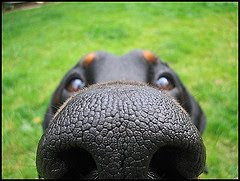
ECU stands for Extreme Close UP. It's an shot type of the camera work. There are a lot of different types of shots like wide shot (WS), medium shot (MS), medium close- up (MCU), close- up (CU) and variations of these frame sizes. The ECU gets right in and shows extreme details. In film, photography and television you work with it, cause the Close-ups are one of the standard shots used regularly with medium shots and long shots. In the Extreme Close Up the shot is so tight that only a fraction of the focus of attention can be seen. A good example for this is the picture above.
(picture: flickr.com)
http://www.mediacollege.com/video/shots/extreme-closeup.html
http://en.wikipedia.org/wiki/Close-up
Subscribe to:
Posts (Atom)
